
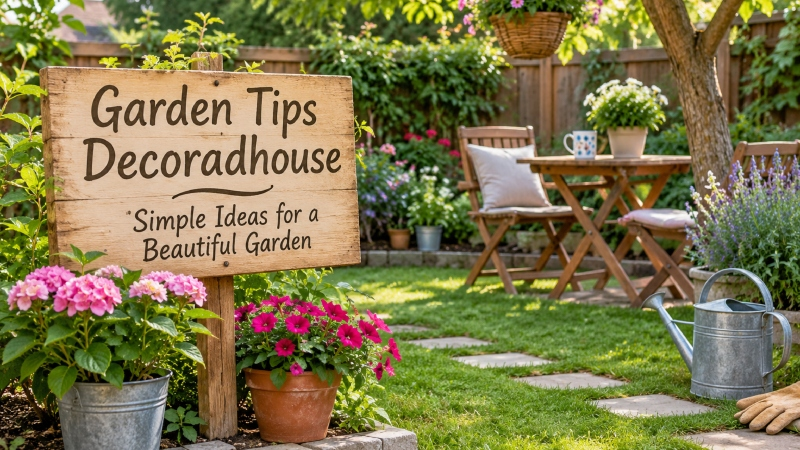
A few healthy plants, a swept path and somewhere decent to sit. That’s usually all it takes to change how a garden feels. Most people walk past their own yard every day without looking at it. With a little work, you end up lingering there instead.
Of course it takes some effort. Plants have their own needs, soil matters more than people expect, and even a balcony with six pots benefits from a plan.
Lots of homeowners think a nice garden costs a lot. Rare plants, new furniture, maybe a landscaper to sort it all out. I don’t agree. The best results I’ve seen came from people who just worked with what they had. An empty corner got a few pots. Old planters got moved somewhere better. A flower bed that looked dead came back after one weekend of weeding and fresh compost.
That’s what these garden tips Decoradhouse readers can use are really about. You want a space that looks good and doesn’t wear you out. If the garden only looks right on the day you arranged it, you’ll give up on it by March.
Start With What You Already Have
Before you buy a single thing, take a slow walk around the garden. Bring a cup of tea. You’ll spot things you stopped noticing years ago, like an old tree with a nice shape, a shrub that has quietly done well, some decent pots, a wooden bench that’s seen better days but still works.
Then look for problems. One corner might be bare. Two plants might be crowding each other out. The path might be green with moss. Write these down if it helps, because they tell you where to begin.
My usual first round goes something like this:
- Throw out broken pots and the stuff you’ve been meaning to get rid of for a year
- Keep the healthy plants that suit where they are
- Scrub the paths and steps
- Shuffle the pots around until the groups look right
- Mark the places that need more green or color
Don’t try and do it all in one weekend. I made that mistake once and came out of it absolutely exhausted with a garden that was in fact worse than when we’d started. Doing it section by section is far easier on the back and on the pocketbook and you do get to see what the effect of each change is before you go and do the next one.
Choose Plants for the Conditions
Check the sun before you check the price. Stand in the spot at noon, then again around four, and see what it really gets. Plenty of new plants die simply because someone guessed.
Tags help, but they’re written for an average garden, and nobody has one. Lavender and rosemary want sun and poor, dry soil. Stick them in a damp shady corner and they’re gone by August. Hostas are the opposite, they scorch. Ferns like it wet. Succulents hate it.
I’d pick three or four kinds, not ten. One shrub as the backbone, a couple of perennials, and something that flowers for a long stretch. Natives are cheap insurance since they already know your weather. Pots are fine on a balcony, but go big. A 10-inch pot can dry out in a single hot afternoon.
And leave gaps. A plant that’s six inches wide in its pot can be two feet across next year. The bed looks thin for a season, then it fills in. Cram them close and you’ll be digging half of them back out.
Make a Small Garden Feel Welcoming
I’d take a well-planned small garden over a big messy one any day. In a small space, everything in it was chosen for a reason.
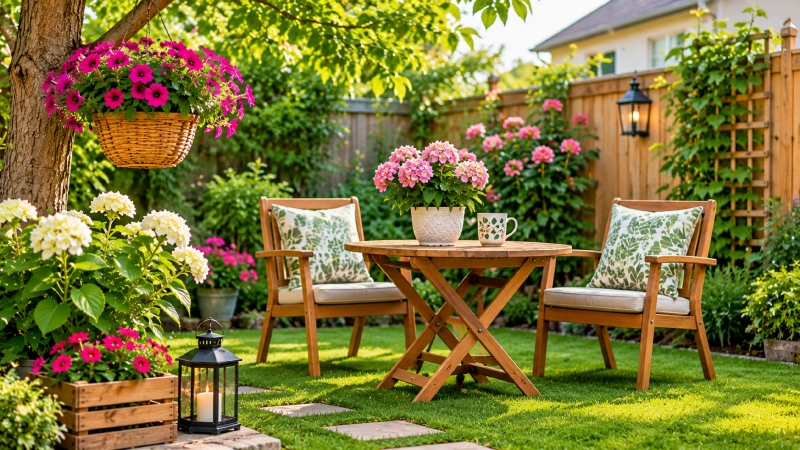
A little seating corner is the easiest win. Two chairs, a small table and a few plants close by. It gives the garden a purpose besides growing things. People end up having their morning coffee there, or reading, or talking with family while the kids play.
If you don’t have much ground, use the walls. A hanging basket on a hook, a few planters screwed to the wall, or a climber on a trellis all give you plants and take up almost no floor. Jasmine does well for this, and a bare fence is usually covered by the end of the first summer.
Be careful not to overdo it though. It starts with one extra pot, then a small table, then another chair, and before long there’s no room to walk. In a small garden that happens quickly. Keep one spot empty, even if it’s just a bit of lawn or a clear patch of floor, because the rest of the garden looks better with some breathing room.
Pay Attention to Soil and Water
Watering tends to get all the praise, yet the soil does a great deal of the work, and most people never give it a second thought.
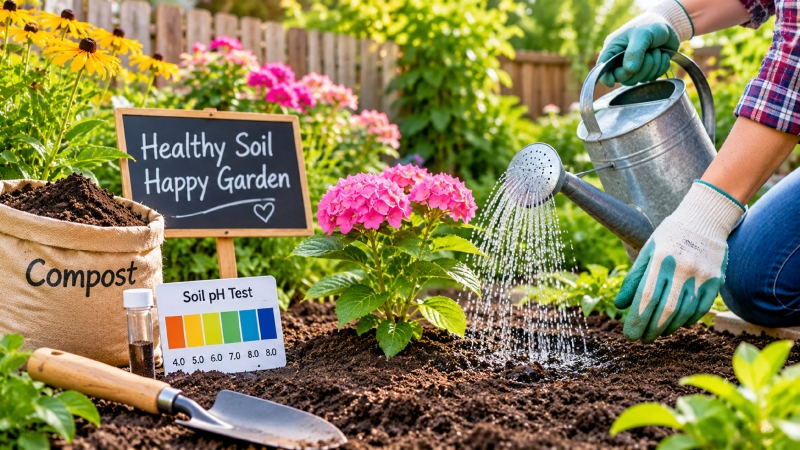
Compact, hard soil that drains badly or lacks nutrients simply won’t support plant growth, no matter how well you water it. Before heading out to buy any fertiliser, figure out what your soil actually has. A basic soil test reveals the pH and nutrient levels and can actually save you from wasting money on products your soil doesn’t need at all. Finished compost is effective at loosening heavy soil and will enhance its structure over time.
Watering takes some judgment as well. A fixed schedule for every plant doesn’t work, because weather, soil type, the plant itself, and recent rain all change how quickly the ground dries.
The easiest check is your finger. Push it into the soil an inch or two. If it’s still damp, leave it. Water at the base of the plant rather than over the leaves. Containers dry out much faster in hot weather, so look at them more often. Don’t let pots stand in a saucer of water, because the roots will rot. And if it rained properly last night, skip today.
Morning is the best time to water. Plants get a drink before the heat arrives, and you lose less water to evaporation.
Build a Comfortable Place to Sit
A garden is far more enjoyable when there’s somewhere to sit and take it in. The seating doesn’t have to be big or pricey. A single comfortable bench next to some healthy plants already makes the space feel complete.
Wood gives a warm, natural look. Metal suits a cleaner, more modern setup. Whichever you choose, check that it can handle your local weather and fits the space you have.
Lighting changes how the garden feels after dark. Outdoor-rated wall lights, low path lights and string lights all make a seating area feel warmer and more welcoming.
Just remember lighting has a practical job too. Steps, paths and doorways need enough light to walk safely at night. Small solar lights look pretty, but I wouldn’t rely on them alone anywhere people actually walk.
Keep It Tidy Without Turning It Into a Chore
Nobody notices a garden getting messy. It happens a bit at a time, a few leaves here, some weeds there, a trowel left on the grass for a week. Then one day you look out the window and the whole place seems neglected, even though the plants are fine.
What helps is doing a little often. I do a quick walk round once a week with a bucket. Pull the weeds you can see, pick up fallen leaves and twigs, and put a finger in the pots to check if they’ve dried out. Ten or fifteen minutes is usually enough.
Once a month, look at the beds properly. Is the mulch getting thin? Have the plants started to crowd each other? Fix it then, while it’s still a small job. And with each change of season, think about pruning, planting and protecting plants from frost or heat, depending on what your plants need.
On mulch, I’m a big fan. A layer of shredded bark or wood chips covers bare soil, keeps weeds down and stops the ground drying out so fast. About two to three inches (5 to 7 cm) is plenty. The one mistake to avoid is piling it up against stems and trunks. Leave a gap of a few inches, otherwise the damp stays against the bark and starts to rot it.
Improve the Garden Without Overspending
Gardening is one of the few hobbies where small budgets still give real results. Before you buy new decorations, look around and ask if something you already own could do the same job.
Old containers can be cleaned and reused. Many healthy plants can be divided to give you extra plants for free, as long as the variety allows it. Furniture can simply be moved somewhere else. A dull path often just needs a good scrub.
It helps to decide what matters most. If your garden is short on greenery, spend on plants first. If it already has plenty of plants but nowhere comfortable to sit, put your money into seating.
Spend on what the space needs and ignore most trends you see online. The garden should suit the people using it, and shouldn’t turn into a collection of things that all need constant care.
Make Everything Work Together
When you treat each part of the garden separately, the whole space can feel scattered. Try thinking about how the plants, paths, seating and decorations relate to each other.
A seating area surrounded by the right plants feels more natural when the path leading to it is clean and easy to walk. A few matching containers, or one consistent style of furniture, can calm the whole space down.
You don’t need to pick one strict design style. Natural, modern, rustic and traditional gardens can all look great. What matters is that the pieces fit together and suit the space you have.
A Garden That Feels Like Yours
A garden should be more than a nice view from the window. It should feel comfortable, show your taste and fit the time you can realistically give it.
The best garden tips Decoradhouse readers can follow aren’t complicated rules. Begin with what you have. Pick plants carefully. Look after the soil and watering. Improve things bit by bit. A clean path, a healthy flower bed or a comfortable corner to sit in can each make a real difference.
There’s no need to rush into a full makeover. Let the garden grow through small, careful changes. When good looks and everyday practicality meet, even a simple outdoor space can become one of the best parts of your home.
For more information or suggestions please contact us.